Essential Drawing Supplies for Beginners and Advanced Artists
Drawing is a fundamental artistic practice that relies on a thoughtful selection of tools. Whether you are just starting or have years of experience, the supplies you choose can influence your technique, comfort, and overall creative process. This article provides a detailed breakdown of essential drawing supplies, focusing on pencils, papers, and erasers. It also offers considerations for different budgets and techniques, helping you make informed decisions that align with your artistic goals.
Understanding the characteristics of each supply can enhance your drawing experience. For instance, the hardness of a pencil affects line quality, while paper texture impacts how marks are received. Erasers are not merely for correction; they can be used as drawing tools themselves. By exploring these categories, you can build a versatile kit that supports both practice and finished artwork.
It is important to note that personal preference and intended outcomes vary. What works well for one artist may not suit another. Therefore, the information presented here is meant to guide rather than prescribe. Experimentation and gradual acquisition are often recommended as you discover what best supports your creative expression.
Pencils: The Core of Drawing
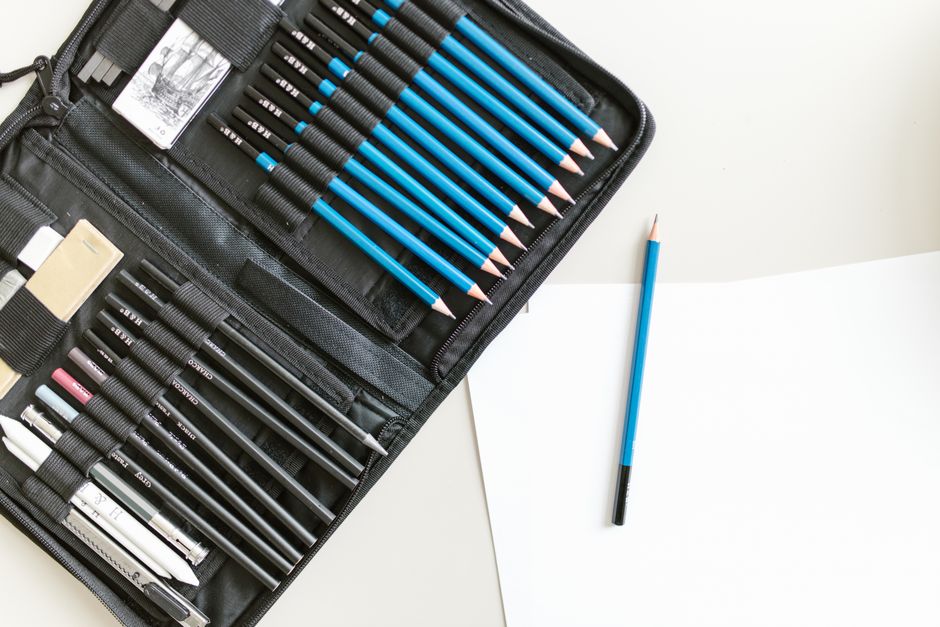
Pencils are the most basic and versatile drawing tool. They come in various grades, typically ranging from hard (H) to soft (B), with HB being the middle ground. Hard pencils produce light, thin lines and are suitable for precise technical drawings or fine details. Soft pencils create dark, bold marks and are favored for shading and expressive sketches. Many artists keep a range of grades on hand to achieve different effects within a single piece.
Graphite pencils are the standard for most drawing. They are available in sets that include multiple grades, allowing for flexibility. For beginners, a set with grades from 2H to 6B covers most needs. Advanced artists might prefer individual pencils or specialized graphite sticks for broader strokes. The quality of graphite varies; some brands offer smoother application and better layering. Creative Canvas offers a selection of graphite pencils that cater to different skill levels, though artists are encouraged to test various options to find their preferred feel.
Colored pencils are another category, offering a wide spectrum of hues. They can be wax-based, oil-based, or water-soluble. Wax-based colored pencils are common and blend well, while oil-based ones are harder and better for detailed work. Water-soluble pencils can be activated with water to create painterly effects. When selecting colored pencils, consider the lightfastness and pigment quality, as these affect longevity and vibrancy. Budget-friendly sets often contain fewer pigments, while professional grades offer richer colors and better blending.
Mechanical pencils provide consistent line width and eliminate the need for sharpening. They are ideal for technical drawing and fine lettering. Lead sizes range from 0.3 mm to 0.9 mm, with 0.5 mm being the most common. Some mechanical pencils have built-in sharpeners or adjustable lead grades. While convenient, they may not offer the same expressive range as traditional wood-cased pencils. For artists who value precision, mechanical pencils are a worthwhile addition to the toolkit.
Papers: The Foundation of Your Artwork
The paper you choose significantly affects how your drawing looks and feels. Key factors include weight, texture, and composition. Weight is measured in pounds (lb) or grams per square meter (gsm). Lighter papers (around 60–80 lb) are suitable for sketching and practice, while heavier papers (90 lb and above) can handle multiple erasures and wet media. Texture refers to the surface finish, which can be smooth, medium, or rough. Smooth paper is good for detailed work and precise lines, while rough paper holds more graphite and is excellent for shading and textured effects.
For graphite drawing, a paper with a slight tooth (texture) is often preferred because it grabs the graphite and allows for layered shading. Bristol board is a popular choice; it comes in vellum (textured) and smooth finishes. Vellum is versatile for both graphite and colored pencil, while smooth is ideal for mechanical pencils and fine ink work. Another option is drawing paper, which is lighter and more affordable, making it suitable for practice and quick studies.
Colored pencil artists often favor papers with a heavier weight and more tooth to build up layers. Pastel paper, with its pronounced texture, can also be used for colored pencils, though it may consume more pencil. For mixed media, consider paper labeled as “mixed media” or “multi-media,” which is designed to handle both dry and wet media without warping. Watercolor paper, when used for drawing, offers excellent durability but may be overkill for simple graphite work.
Budget considerations play a role in paper selection. Beginners can start with a spiral-bound sketchbook of decent quality; these are portable and inexpensive. As skills advance, investing in larger sheets or pads of professional paper can enhance results. Creative Canvas offers a range of papers suitable for different techniques, but it’s advisable to sample small quantities before committing to a large pack. Remember that paper is not just a support; it interacts with your tools and influences the final outcome.
Erasers: Beyond Correction
Erasers are essential for correcting mistakes, but they also serve as creative tools. There are several types: kneaded, vinyl, gum, and precision. Kneaded erasers are pliable and can be shaped to a point for highlighting or lifting graphite without damaging the paper. They do not leave residue and are ideal for shading and creating soft transitions. Vinyl erasers are firmer and effective for erasing dark marks; they can also be cut into fine points for detail work. Gum erasers are softer and less abrasive, suitable for delicate papers, but they wear down quickly.
Precision erasers, often in pen form, allow for exact erasing of small areas. They are useful for cleaning up edges or creating highlights in colored pencil work. Some artists use erasers to draw negative space, removing graphite to reveal the white of the paper. This technique can add dimensionality and light to a drawing. When using erasers, it’s important to apply gentle pressure to avoid damaging the paper surface. Over-erasing can roughen the paper, making it difficult to lay down new marks.
For colored pencil and graphite, a combination of kneaded and vinyl erasers covers most needs. Beginners might start with a standard vinyl eraser and a kneaded eraser. Advanced artists may accumulate a variety, including electric erasers for large areas or specialized putty erasers for subtle lifting. It’s worth noting that some erasers can smudge graphite if not used carefully; testing on a scrap piece of paper is advisable. Creative Canvas provides erasers that complement their drawing supplies, but artists should experiment to find what works best for their techniques.
Budget and Technique Considerations
Building a drawing kit does not require a large investment initially. Beginners can assemble a basic set for under $50, including a sketchbook, a set of graphite pencils, a vinyl eraser, and a kneaded eraser. As skills develop, adding specialized items like colored pencils, blending stumps, or higher-quality paper can be done gradually. It’s often more effective to invest in a few quality tools than many inexpensive ones that may frustrate. However, budget constraints are real, and there are many affordable options that perform well.
Different techniques demand different supplies. For example, realistic shading benefits from soft pencils and paper with tooth, while technical drawing requires hard pencils and smooth paper. Expressive sketching might use charcoal or graphite sticks on rough paper. Colored pencil work often necessitates papers that can hold many layers, such as Bristol vellum or pastel paper. Water-soluble pencils open up mixed media possibilities, requiring paper that can handle moisture. Understanding these relationships helps in selecting appropriate materials.
Ultimately, the best supplies are those that suit your personal style and workflow. It’s advisable to try different brands and types to see what feels comfortable. Local art supply stores or online retailers often sell individual pencils and small paper pads, allowing for low-risk experimentation. Creative Canvas offers a variety of options, but the goal is to empower artists to make informed choices. Remember that tools are means to an end; consistent practice and exploration are key to growth.
Maintaining and Organizing Your Supplies
Proper care extends the life of your drawing supplies. Pencils should be sharpened regularly, but avoid over-sharpening as it wastes material and can weaken the lead. A quality sharpener with a stainless steel blade is a good investment. Store pencils in a case or roll to prevent breakage. Papers should be kept flat and away from moisture and direct sunlight to prevent warping and yellowing. Erasers can dry out over time; kneaded erasers can be stretched and worked to restore pliability, while vinyl erasers should be kept clean by rubbing them on a scrap paper.
Organization is also important. A pencil case with compartments, a portfolio for paper, and a small box for erasers help keep everything accessible. Some artists prefer to arrange supplies by frequency of use. Keeping a dedicated drawing space, even if it’s a small desk, can facilitate regular practice. Creative Canvas offers storage solutions that some artists find helpful, but any system that works for you is fine. The key is to maintain your tools so they are ready when inspiration strikes.
In conclusion, the essential drawing supplies for beginners and advanced artists revolve around pencils, papers, and erasers. Each category offers a range of options that cater to different techniques and budgets. By understanding the properties of these tools and how they interact, you can make choices that support your artistic journey. Whether you are just starting or looking to expand your kit, a thoughtful selection will enhance your drawing experience.